PAWS
Wipe after every walk
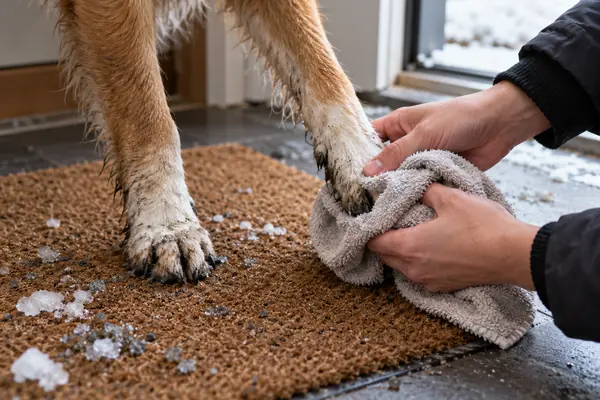
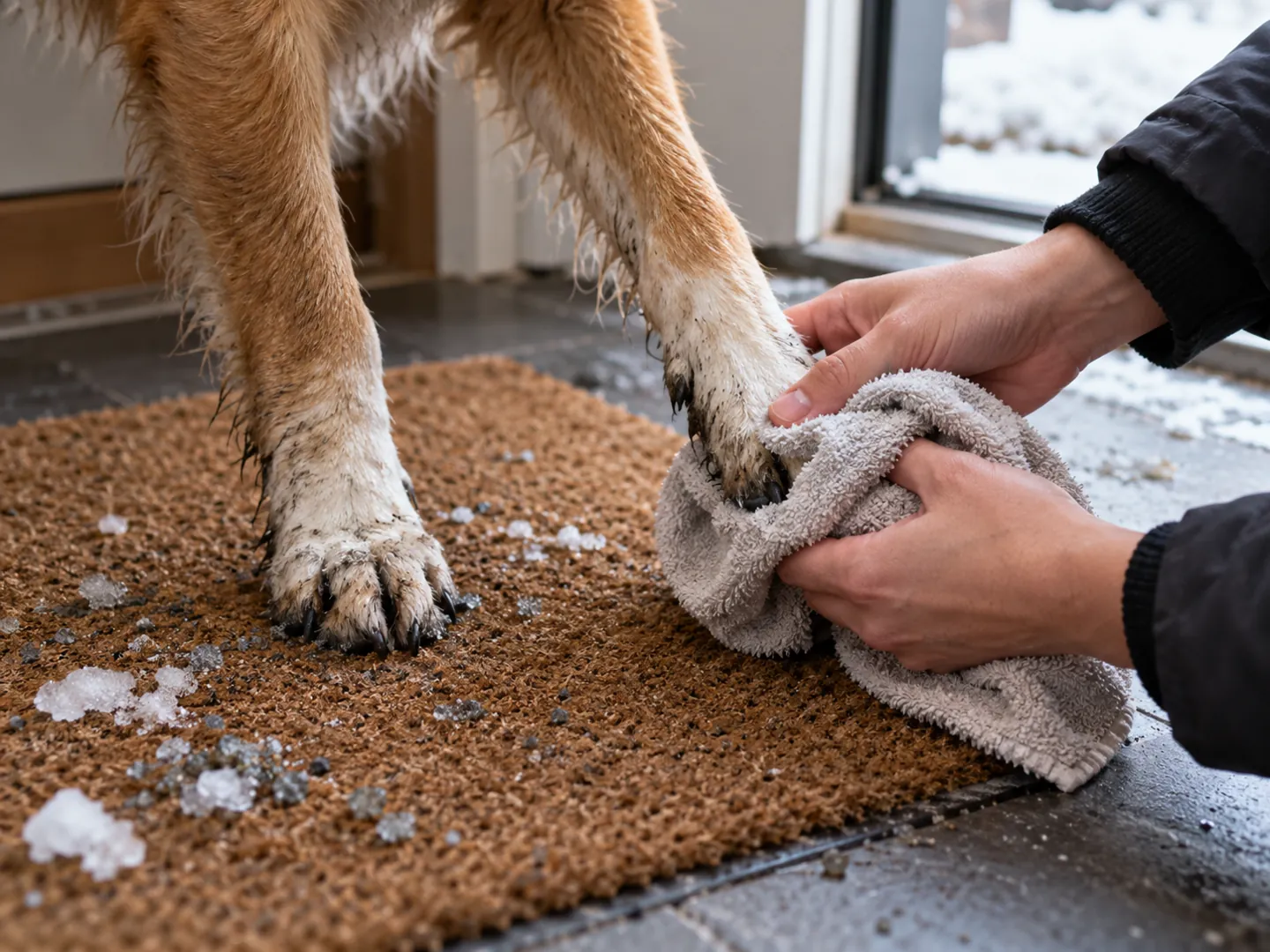
Dogs Trust says to wipe your dog's legs, feet and belly after a walk, because road grit and wet snow can irritate the skin, and dogs may lick off what they stepped in.
Check a hazard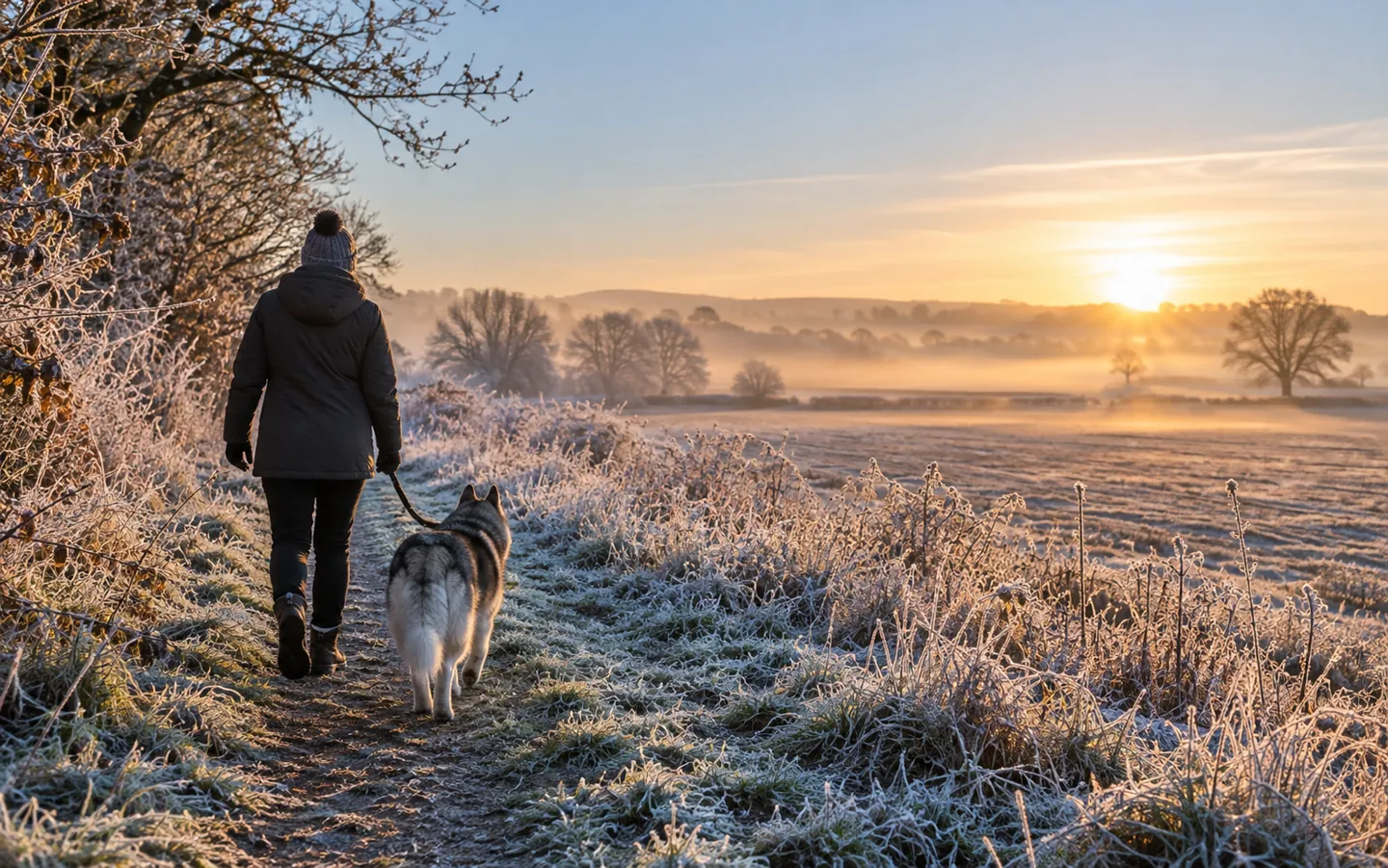
WHAT UK VETS AND CHARITIES SAY
WINTER WALKS shorter, more often
AI-generated image, not a photograph of a real person or place.
Not every dog is built like a husky.
Winter walks bring a few hazards summer does not: rock salt and grit on pavements, antifreeze spills on driveways, ponds that look solid, and walks that start or end in the dark. UK vets and dog charities keep coming back to the same handful of habits.
THE SHORT ANSWER
Dogs still need their exercise in winter.
Vets suggest going out more often, for less time.
PAWS
Dogs Trust says to wipe your dog's legs, feet and belly after a walk, because road grit and wet snow can irritate the skin, and dogs may lick off what they stepped in.
Check a hazardTHE DARK
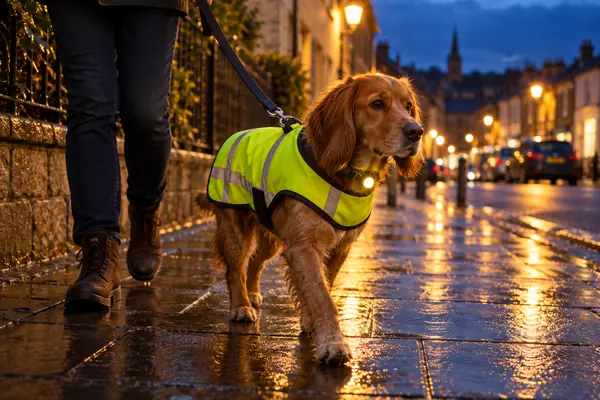
Winter walks often happen at dusk. Charities suggest a reflective coat, collar or lead for the dog and something bright or reflective for you.
See the numbersCOLD
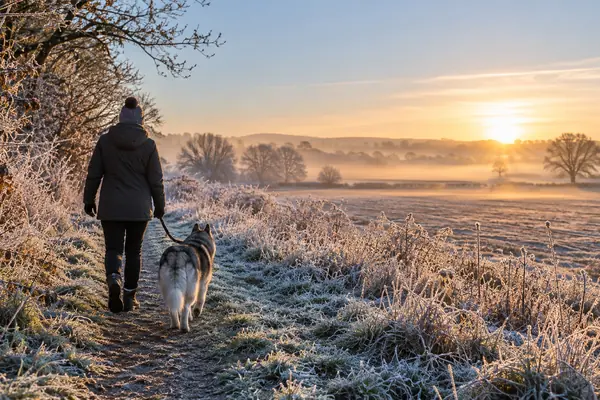
The BVA suggests walking dogs for less time but more often when temperatures drop, and a coat for older dogs or those with thin fur.
Four habits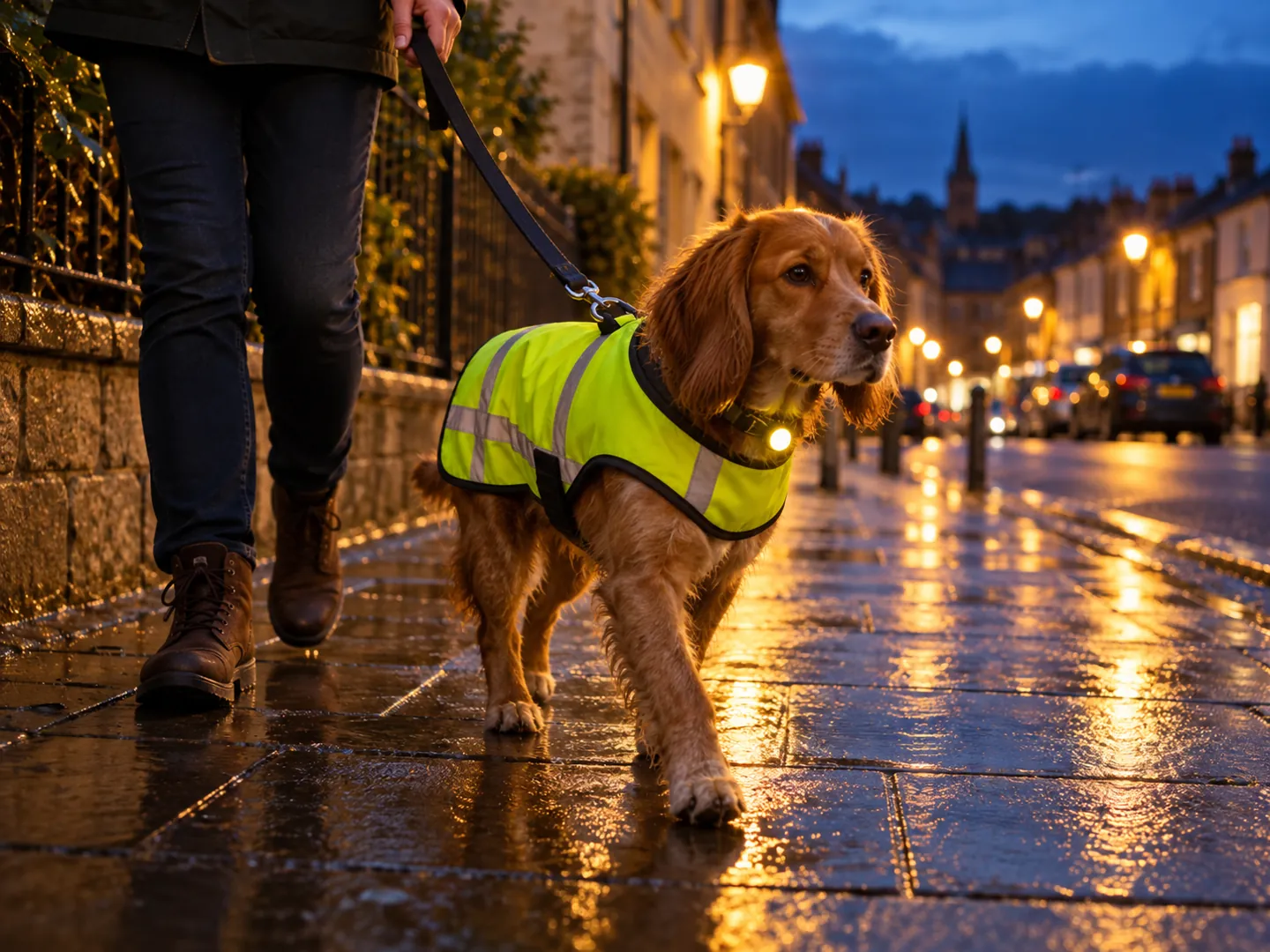
FOUR HABITS FOR WINTER
None of these needs much kit. They come from the winter advice that UK vets and dog charities publish every year.
Wipe legs, feet and belly after each walk and check the pads for cracks or redness between the toes.
Dogs Trust notes that clips are harder to do up with cold fingers, and wet weather can rust metal clips, so check them too.
A reflective coat or collar and a light for the dog, plus something reflective and a torch for you.
Keep antifreeze, screen wash and de-icers sealed and away from pets, and mop up spills straight away.
TWO NUMBERS WORTH KNOWING
How often vets saw antifreeze poisoning,
and how much further reflective kit can be seen.
1 in 4
Vets who had treated cats for antifreeze poisoning in a year
In winter advice from the BVA and BSAVA in 2016, one in four vets reported treating cats for antifreeze poisoning in the previous year, and a further 2% reported also treating dogs.
ANTIFREEZE · BVA / BSAVA
3× further
How far reflective materials can be seen
Rule 3 of the Highway Code says reflective materials can be seen by drivers using headlights up to three times as far away as non-reflective materials.
VISIBILITY · HIGHWAY CODE
Rule 56 of the Highway Code also says to keep a dog on a short lead when walking on the pavement, road or a path shared with cyclists or horse riders.
A QUICK HAZARD CHECK
Pick something you might come across on a winter walk to see what UK vets and dog charities say about it. The bar shows how serious the charities treat the risk.
Based on published winter advice from the RSPCA, Dogs Trust, the BVA and BSAVA. General information only, not veterinary advice: if you think your dog is unwell or has swallowed something, contact a vet.
THICK COATS AND THIN ONES
Some dogs grow thick coats all year, and Dogs Trust suggests letting that fur grow a little longer as it gets colder. Puppies, older dogs and short-haired breeds lose heat faster and may need a coat outdoors.
The RSPCA adds that flat-faced breeds can find cold air harder to breathe, cold can make arthritis worse, and dogs with heart problems may struggle to exercise in the cold. A dry coat matters too: wet fur in cold wind can lead to chilling.
In conversation
It depends on the dog. Dogs Trust and the RSPCA say puppies, older dogs and short-haired breeds feel the cold more and may need one, while some dogs grow thick coats all year. Introduce a coat gradually.
Grit and rock salt can make paw pads sore and cracked, and dogs can swallow what they lick off. Dogs Trust advises wiping legs, feet and belly and checking between the toes.
Yes. Dogs Trust says antifreeze contains ethylene glycol, which is highly toxic, and its sweet taste can tempt pets. The RSPCA says if you suspect poisoning, contact a vet immediately rather than waiting.
Ice may not hold a dog's weight. Dogs Trust and the BVA advise not going in after a dog that falls through: encourage it to swim back to you and call the emergency services.
Rule 56 says not to let a dog out on the road on its own and to keep it on a short lead on pavements, roads and paths shared with cyclists or horse riders.
Each figure on this page comes from the sources below.
ABOUT THIS NAME
doodlehuskie.com is part of the DoodleSale portfolio. It isn't in an auction right now, but you can ask about leasing it.